Photo credit
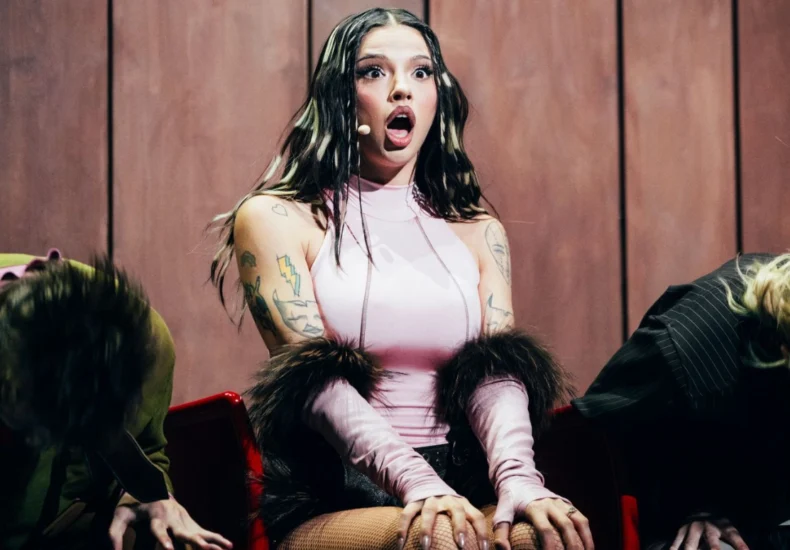
Eurovision Song Contest 2026 - Dara - Bulgaria
Dara Won Eurovision — But the Real Story Is the Scandal the EBU Can’t Escape
Bulgaria’s historic Eurovision 2026 win with Dara’s «Bangaranga» comes amid fierce criticism of the EBU, with campaigners accusing organisers of ignoring boycotts, Israel propaganda concerns and unresolved controversies linked to Moroccanoil sponsorship and the Joost Klein disqualification.
Bulgaria has delivered the shock of the decade at Eurovision – and in doing so, critics say the country has unintentionally rescued the European Broadcasting Union from what many had already dubbed a «genocide embarrassment». For months, campaigners have accused the EBU of refusing to grasp how allowing Israel to compete is viewed as part of a wider state‑driven propaganda effort. And after five countries boycotted this year’s Contest in protest, furious voices insist it is «very sad» that the EBU still doesn’t understand the point.
But the night took a dramatic turn when Bulgaria stormed to its first‑ever Eurovision victory. Dara, the nation’s breakout superstar, electrified the Wiener Stadthalle with her explosive anthem «Bangaranga», securing a historic 516‑point win. As hosts Victoria Swarovski and Michael Ostrowski held the world in suspense, fans across Vienna and beyond watched Bulgaria return from a four‑year break and snatch the trophy in spectacular fashion.
Yet behind the glitter and confetti, the political storm refuses to fade. Critics are now openly questioning whether Eurovision and its organiser, the EBU, have become financially dependent on Israel through the Contest’s main sponsor, Moroccanoil. The partnership was first signed in 2019 and took effect in 2020, the year Eurovision was cancelled due to the pandemic. It was then renewed indefinitely after the highly controversial 2024 final in Malmö, Sweden — a year still remembered for the disqualification of Dutch artist Joost Klein, a decision the EBU has never publicly apologised for. Broadcaster Avrotros has repeatedly maintained that the claims made by the Israeli delegation were false, and many fans believe the fallout permanently damaged trust in the Contest’s leadership.
Campaigners argue that the pattern is now impossible to ignore. They claim that if a sponsor has enough money, the EBU appears willing to overlook even an ongoing genocide, while Israel continues to take centre stage on the Eurovision platform. For these critics, the optics are devastating: a global music celebration overshadowed by accusations of political whitewashing, selective accountability and corporate influence.
But for one night at least, Bulgaria’s victory shifted the narrative. Dara’s triumph gave fans something joyful to celebrate, even as the wider debate around Eurovision’s integrity grows louder by the day.
Most Popular
- Books & Literature
Campaigners To Write Book Telling Australia’s Marriage Equality Story
- World - LGBTQ Rights
Homophobic Uganda Should Reject Sexual Offences Bill
- Music Video
Osher Sebbag – «I’m not your top»
- USA - LGBTQ Rights
United States: State Laws Threaten LGBT Equality


Must Reads
- Music Video
Lyle Anthony – «My Forever»